A bold new approach to brain-computer interfaces is about to enter its first human trial.
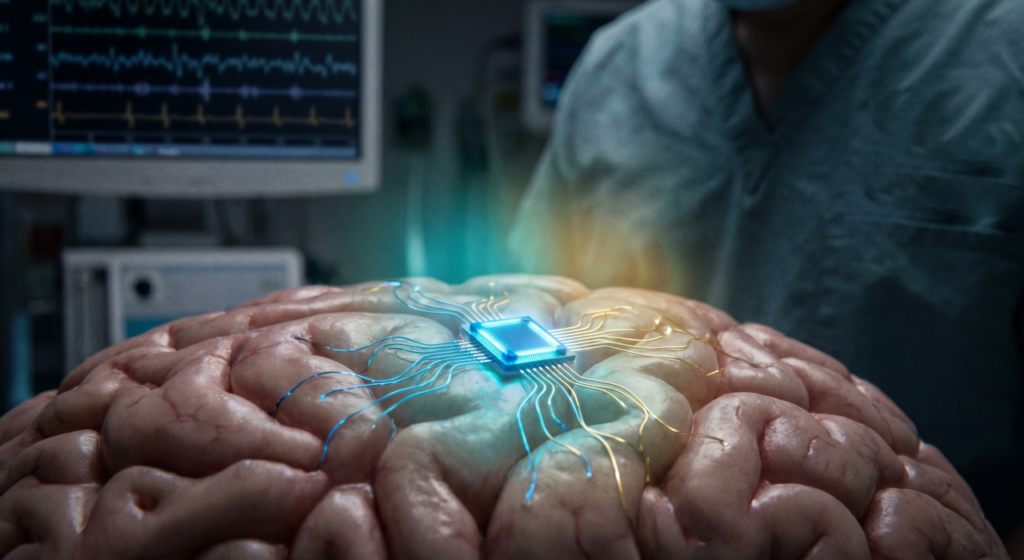
Science Corporation, founded by former Neuralink president Max Hodak, is preparing to place its first sensor inside a human skull. The pea-sized chip, packed with 520 recording electrodes, will not pierce brain tissue like Neuralink’s implant. Instead, it will rest on top of the brain’s surface, recording neural activity while a neurosurgeon is already operating for an unrelated condition.
Leading the effort is Dr. Murat Günel, chair of neurosurgery at Yale School of Medicine, who will implant the first sensor in a patient already undergoing major brain surgery, such as a stroke victim requiring a craniectomy. The device will test safety and recording capability without the biohybrid components initially.
A Radical New Approach to Brain Interfaces
The long-term vision is a biohybrid neural interface: a device embedded with lab-grown neurons genetically modified with light-sensitive proteins. Micro-LEDs on the chip trigger these neurons to fire, designed to integrate naturally with the patient’s own brain cells over time. Where Neuralink and others refine how electrodes interact with neurons, Science Corp wants to grow new neurons that speak both biological and electronic languages natively.
What’s Next
The company raised $230 million in a Series C round at a $1.5 billion valuation and expects human trials to begin as early as 2027