
A ransomware attack has disrupted operations at a Texas water treatment facility, forcing SCADA systems offline and triggering an emergency alert from CISA. The Daixin Team ransomware gang claimed responsibility for the breach, marking one of the most significant cyberattacks against critical infrastructure in 2026. While no water contamination has been reported, the incident exposes the alarming vulnerability of America’s water sector to cyber threats.
Understanding the Texas Water Utility Attack
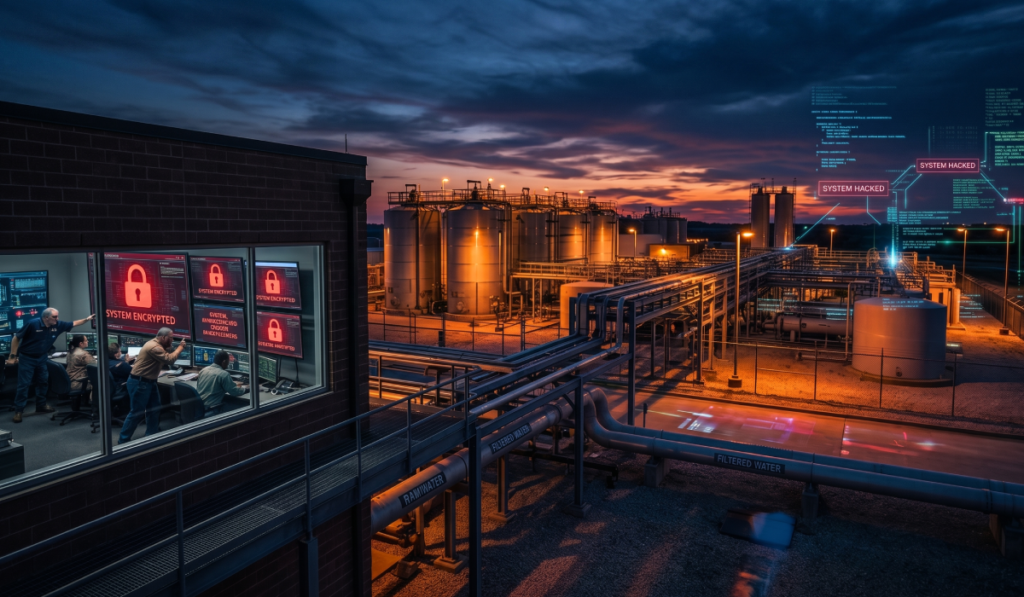
On July 1, 2026, the Cybersecurity and Infrastructure Security Agency (CISA) issued an ICS Advisory confirming that a Texas water utility fell victim to a Daixin Team ransomware attack. The threat actors infiltrated the facility’s industrial control systems (ICS), encrypting critical operational technology (OT) and briefly taking SCADA systems offline. The attack disrupted water monitoring and treatment processes, forcing operators to switch to manual controls.
While the facility restored operations within hours, the incident underscores the escalating threat facing water and wastewater systems across the United States. According to CISA, the attack vector involved compromised remote access credentials, highlighting the persistent challenge of securing OT environments against increasingly sophisticated adversaries.
Who Is the Daixin Team Ransomware Gang?
The Daixin Team is a ransomware-as-a-service (RaaS) group that has aggressively targeted healthcare and critical infrastructure sectors since 2022. Known for double-extortion tactics, the group encrypts systems while exfiltrating sensitive data to pressure victims into paying ransoms. The Texas water utility attack aligns with Daixin’s pattern of targeting entities where operational downtime carries life-threatening consequences.
CISA has previously issued alerts about Daixin’s tactics, including their use of VPN vulnerabilities and phishing campaigns to gain initial access. The group’s pivot to water utilities signals a dangerous escalation in their targeting strategy.
Critical Infrastructure at Risk
The Texas attack is not an isolated incident. The water sector faces unique cybersecurity challenges:
- Legacy OT systems lack built-in security features
- Converged IT/OT networks create expanded attack surfaces
- Limited cybersecurity budgets in municipal utilities
- Remote access points are often unprotected by multi-factor authentication
CISA has identified water and wastewater systems as one of the most vulnerable critical infrastructure sectors, with over 70% of utilities reporting ransomware attempts in the past year. The agency continues to urge utilities to implement immediate security improvements.
CISA ICS Advisory: Key Recommendations
Following the Texas water utility attack, CISA released ICS Advisory ICSA-26-182-01 with urgent recommendations:
- Isolate OT networks from internet-facing systems
- Implement multi-factor authentication (MFA) for all remote access
- Conduct regular vulnerability assessments of ICS environments
- Develop and test incident response plans specific to OT incidents
- Enable comprehensive logging to detect unusual activity
CISA also emphasized the importance of cyber hygiene practices, including timely patching, network segmentation, and employee security awareness training.
Impact on Water Treatment Operations
The ransomware attack temporarily disrupted SCADA system functionality, affecting:
- Water quality monitoring and chemical dosing controls
- Pressure management and flow rate adjustments
- Alarm systems for detecting anomalies
Operators successfully reverted to manual control procedures, preventing any public health impact. However, the incident exposed the fragility of automated systems essential for delivering safe drinking water to thousands of residents.
Building Resilience for the Future
The Texas water utility attack serves as a wake-up call for the entire water sector. Utilities must adopt a proactive security posture that includes:
- Continuous OT monitoring with specialized ICS threat detection
- Regular penetration testing of control systems
- Collaboration with CISA and sector-specific information sharing
- Investment in cybersecurity training for OT personnel
- Implementation of zero-trust architecture in OT environments
Final Thoughts: Protecting America’s Water
The Daixin Team ransomware attack on a Texas water utility is more than a cybersecurity incident—it’s a national security concern. CISA’s emergency alert should mobilize every water utility to assess and strengthen its defenses. The time to act is now, before the next attack disrupts the essential service that sustains communities across America.
Water security is national security. Protect your utility, protect your community.

